Record money movement with the right account.
Use receipt and payment entries to record money received or paid. Select the relevant party and cash/bank account so later ledger review has a clear trail.
Actual collection or payment
Account and method allocation
Ledger plus cash / bank entry
See the screens behind the workflow.
Real screens from the Speed Plus 9 manual. Open any image to inspect the details.
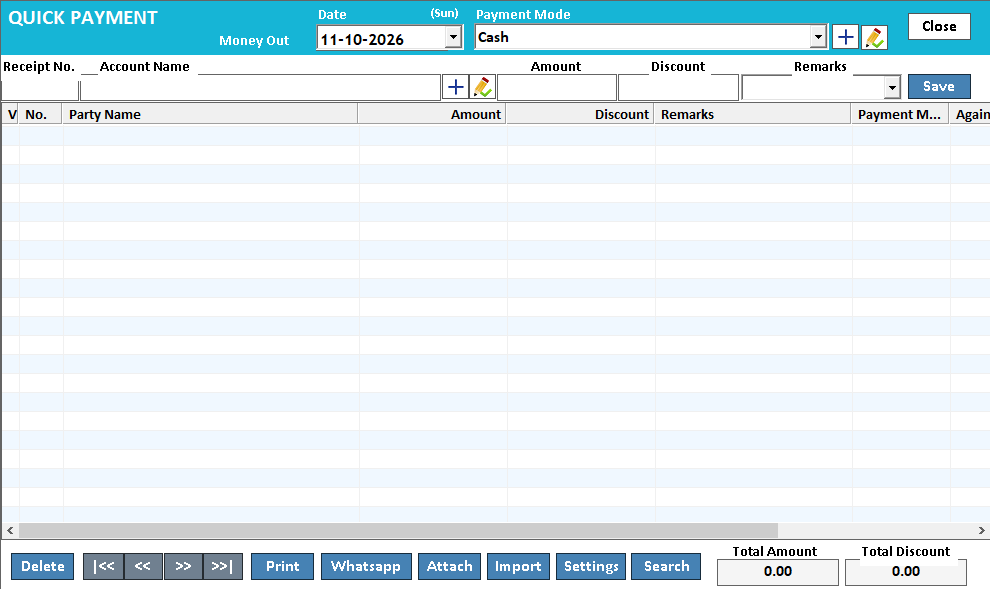 View full size ↗
02Keep a bank entry traceable+
 View full size ↗
03Record cash deposited into the bank+
 View full size ↗
Choose the money movement you are actually recording.
Quick Payment includes the date, mode, account, amount and remarks. Bank Entry has specific types such as Cheque Issued and Deposit Cash Into Bank. Select the transaction type that describes the movement, then review the relevant party and cash or bank records.
Money moving and goods moving are different events.
A receipt records money coming in; a payment records money going out. These entries connect the actual cash or bank movement with the relevant account. They are essential for explaining why an amount due changed after a sale or purchase.
Select the account, date, amount and supported payment method, then keep a useful reference or narration. Where bill-wise accounting applies, allocate the settlement appropriately. Review the party ledger and cash or bank book together to confirm both sides of the entry.
How to use it.
Record money movement with the right account.
- 01
Choose receipt or payment and the relevant accounts
- 02
Enter amount, date and useful reference details
- 03
Check the party ledger and cash/bank position
What this looks like in your business.
A customer pays an earlier credit bill by bank transfer. The entry needs the customer reference and the correct bank account.
Good questions.
Clear answers.
Choose the workflow that fits your business and confirm its setup in a demonstration.
What should I record with a bank transfer?
Keep the correct bank account, party, amount, date and a usable transfer reference. If the bank date differs from the entry date, retain enough context for later reconciliation instead of changing unrelated bills.
What setup should I confirm?
A recorded entry is not proof that the bank transfer succeeded; reconcile it with the payment evidence.
Follow a credit sale through to collection
Connect the customer account, invoice, outstanding amount and receipt.
- 01Customer and supplier ledgersRead guide →
- 02GST invoicingRead guide →
- 03Bill-by-bill outstandingRead guide →
- 04Receipts and paymentsYou are here
What else can help?
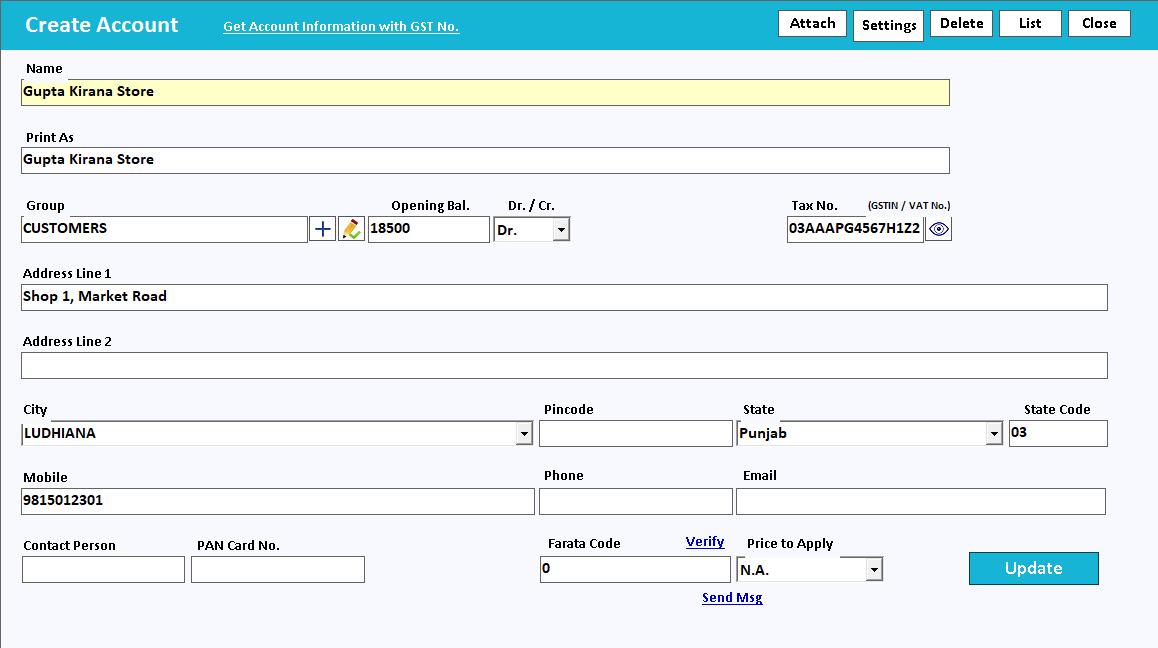
Customer and supplier ledgers
See what a customer owes or a supplier is due.
Read the guide →Ledger with item details
Understand the balance and the items behind it.
Read the guide →Bill-by-bill outstanding
Know which invoice still needs payment.
Read the guide →See it with a sample from your business.
Bring a sample bill or item list. We’ll show you the steps and answer your questions.